If you need to jump start your car in Perth, a slow-turning engine can provide an important clue about the condition of your battery. CMM Automotive recently attended a Hyundai i30 in Kewdale after the owner returned from a two-week holiday and found that the car would turn over slowly but would not start.
We tested the Hyundai’s battery and quickly found the problem. The battery carried a rating of 650 CCA but produced only 119 CCA during our test. After we explained the results, the owner decided to replace the battery with a new one.
Hyundai i30 Turning Over Slowly in Kewdale
The Hyundai had remained parked while the owner was away for two weeks.
When the owner returned and tried to start the car, the engine still turned over. However, it cranked much more slowly than normal and would not start.
This symptom often points towards a weak battery.
A battery may still contain enough energy to operate the dashboard lights, radio and other electrical components. However, the starter motor requires considerably more power to crank the engine properly.
When battery performance drops too far, the starter may turn the engine very slowly without achieving a successful start.
Battery Testing Showed Only 119 CCA
Rather than assuming the Hyundai simply needed a car jump start in Perth, we tested the battery to check its actual condition.
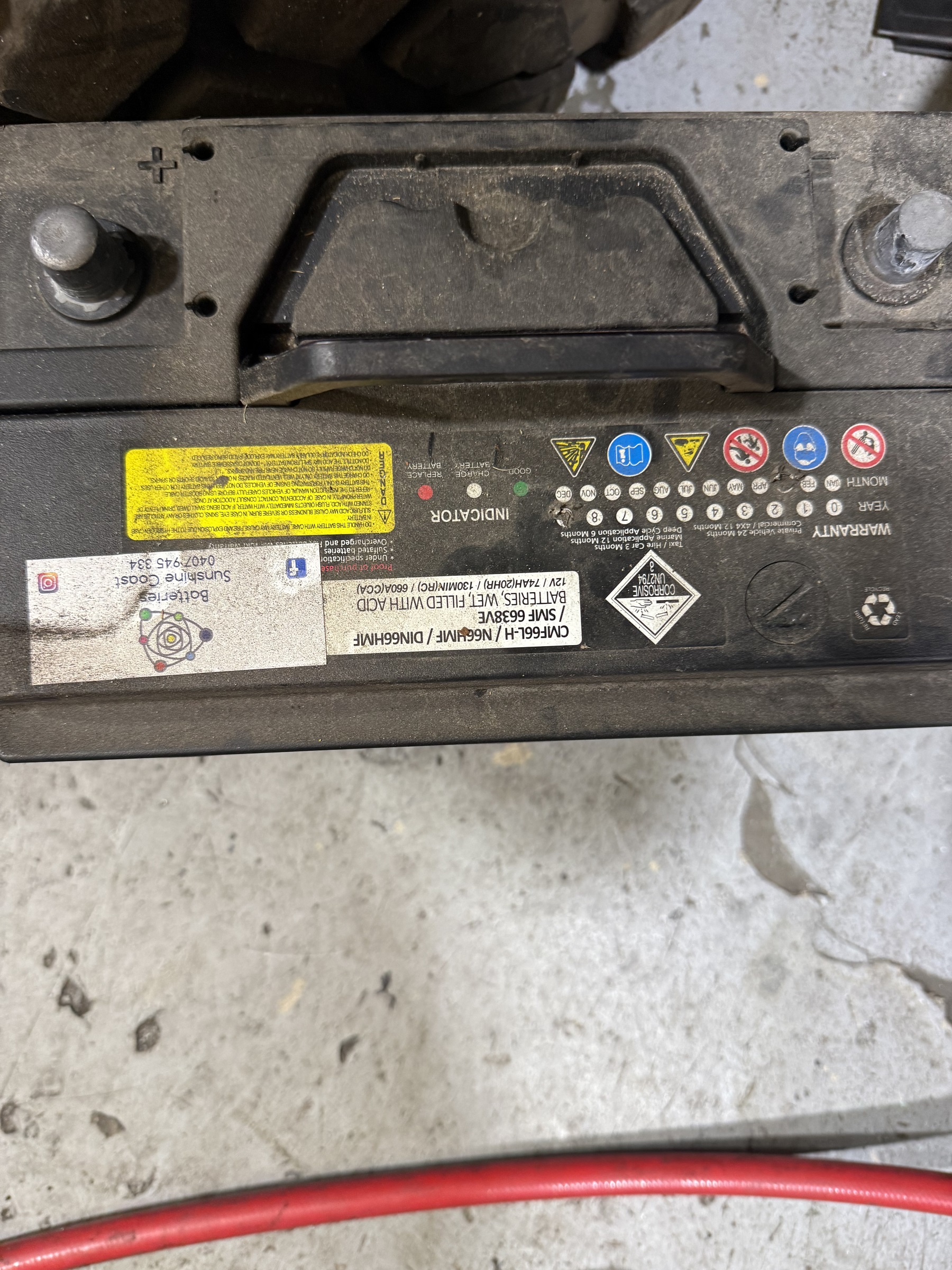
The battery had a rating of 650 cold cranking amps (CCA).
Our test showed only 119 CCA.
That result showed a substantial loss of starting performance. The battery could no longer provide anything close to its rated cranking capacity.
After seeing the test results and discussing the options, the owner chose to fit a new battery.
What Does CCA Mean on a Car Battery?
CCA stands for cold cranking amps and provides an indication of a battery’s ability to supply the electrical current needed to start an engine.
A vehicle’s starter motor needs a large amount of current for a short period. A healthy battery needs to provide that power quickly.
As a battery ages or deteriorates, its available cranking capacity can decrease.
This Hyundai provided a clear example.
The label showed a 650 CCA rating, while our battery test measured just 119 CCA. With such a large reduction in available starting power, the slow engine cranking made sense.
Can Leaving a Car Parked Cause Battery Problems?
Leaving a vehicle parked for two weeks doesn’t automatically mean the battery should go flat.
A healthy battery should generally cope with normal periods when the vehicle isn’t in use. However, an ageing or already weak battery can struggle after the car sits for an extended period.
Modern vehicles also continue to use small amounts of electrical power while parked. Security systems, computers, keyless-entry systems and other electronics may remain active.
Normally, these systems create no problem for a healthy battery.
A weak battery has much less reserve capacity. After sitting unused, it may no longer have enough starting power when the owner returns.
Why Testing the Battery Matters
A slow-cranking vehicle doesn’t automatically need a new battery.
Poor electrical connections, starter motor problems and other faults can sometimes create similar symptoms.
Battery testing gives us useful information before recommending replacement.
In this case, the difference between the Hyundai battery’s 650 CCA rating and its measured 119 CCA provided strong evidence that the battery had deteriorated significantly.
The owner could then make an informed decision instead of repeatedly jump starting a battery that had very little cranking performance remaining.
Jump Starting a Weak Battery
A mobile jump start in Perth can provide enough additional electrical power to start a vehicle when its own battery cannot supply sufficient current.
However, a jump start doesn’t restore the health of a badly deteriorated battery.
A weak battery may start the vehicle with assistance but struggle again the next time the driver switches off the engine.
That is why we don’t treat every starting problem as simply a matter of connecting jumper leads.
Finding the cause can help prevent the owner from becoming stranded again.
Mobile Jump Start Assistance in Kewdale
CMM Automotive provides mobile jump start assistance in Perth, including Kewdale and surrounding suburbs.
We come directly to the vehicle, which makes the service particularly convenient when your car will not start at home, at work or in a car park.
In this case, testing the Hyundai onsite showed the owner exactly why the engine struggled to turn over.
With only 119 CCA available from a battery rated at 650 CCA, the owner decided that replacement made more sense than continuing to rely on the old battery.
Need to Jump Start Your Car in Perth?
If your vehicle turns over slowly or won’t start because of a weak or flat battery, CMM Automotive can come directly to your location.
Our Mobile Car Jump Start Perth service helps drivers throughout the Perth metropolitan area with flat batteries and starting problems.
We can assess the symptoms and check the battery condition rather than simply assuming every vehicle needs the same solution.
This Hyundai i30 in Kewdale demonstrates why battery testing can be valuable. The vehicle still turned over, but the battery had lost a large amount of its original cranking performance.
Testing identified the problem, and fitting a new battery gave the owner a reliable solution.
Frequently Asked Questions
Why does my car turn over slowly but not start?
A weak battery is one possible cause. The battery may have enough power to turn the engine slowly but not enough to crank it properly for starting.
What does CCA mean on a battery?
CCA means cold cranking amps. It indicates the battery’s ability to provide the high electrical current required during engine starting.
Should a car battery go flat after sitting for two weeks?
A healthy battery will often handle this period without trouble. An older or weak battery may struggle after the vehicle remains unused.
Can CMM Automotive test my battery onsite?
Yes. Battery testing can help determine whether the battery simply needs assistance or has deteriorated enough to consider replacement.