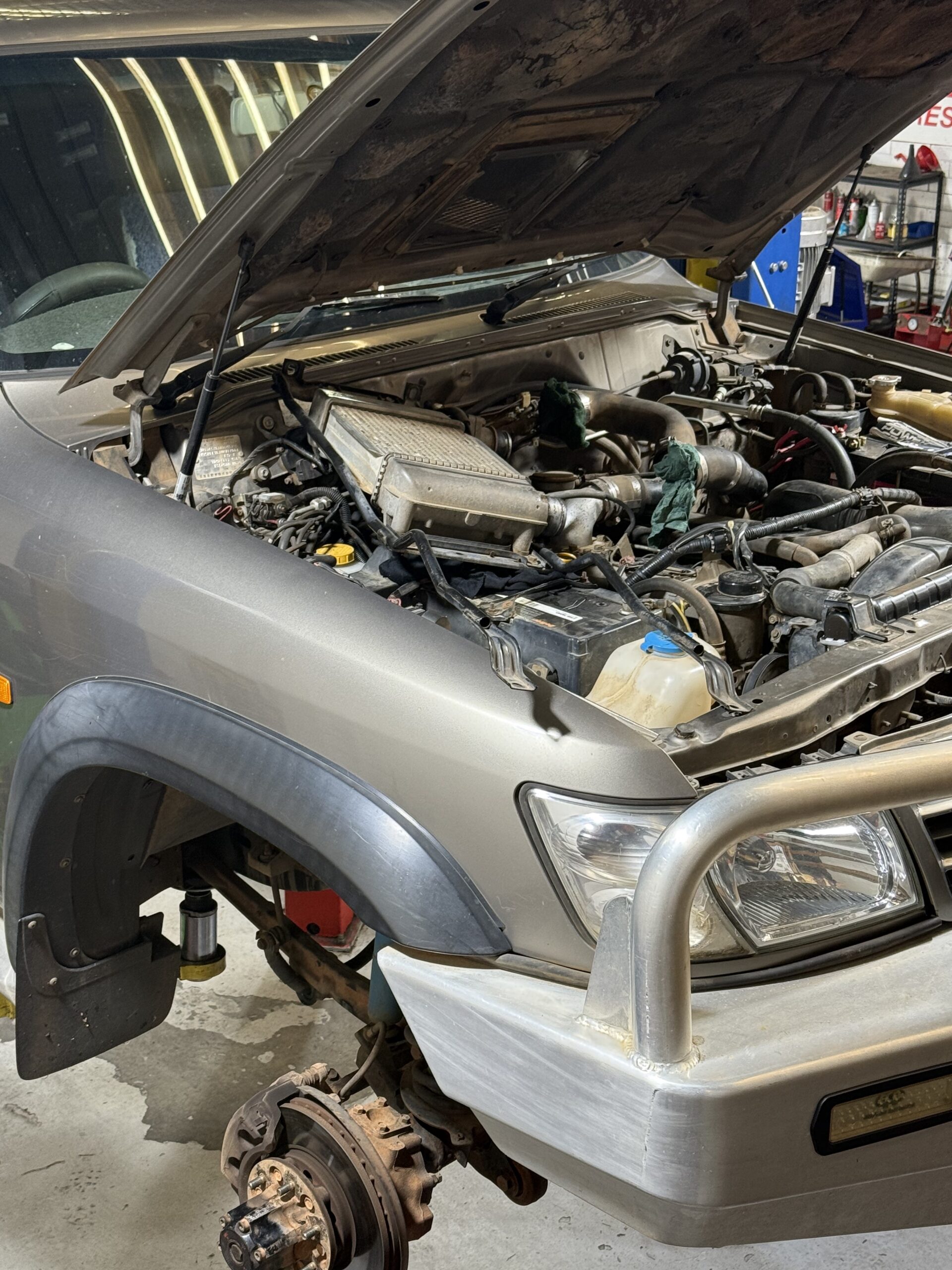
found from a mobile vehicle inspection
Knowing the signs of a bad used car engine can help you avoid purchasing a vehicle that may require expensive repairs. A car can look clean, start normally and even seem fine during a short test drive while still having underlying engine problems.
When buying a used vehicle, it’s important to look beyond its appearance. Engine noises, fluid condition, warning lights and exhaust smoke can all provide clues about how well the vehicle has been maintained.
Here are some of the problems worth watching for.
Unusual Engine Noises
Listen carefully when the engine first starts.
Knocking, tapping, rattling or ticking noises can indicate that something requires further investigation.
Some engine noises may have relatively minor causes, while others can indicate worn or damaged components.
It’s also useful to listen to the engine when it’s cold. Certain noises may become quieter once the engine reaches operating temperature.
If possible, avoid inspecting a vehicle that the seller has already warmed up before you arrive.
Engine Oil Leaks
Look around the engine and underneath the vehicle for signs of oil leakage.
Small oil weeps don’t necessarily mean an engine is in poor condition. However, significant leaks or oil covering several engine components deserve closer investigation.
Oil leaks can develop from gaskets, seals and other components.
Freshly cleaned areas around an otherwise dirty engine can also be worth examining carefully.
Check the Engine Oil Condition
Checking the engine oil can provide useful information.
An excessively low oil level may indicate poor maintenance, oil consumption or leakage.
The condition of the oil can also provide clues, although oil colour alone doesn’t determine whether an engine is healthy.
A vehicle’s servicing history should be considered alongside the physical inspection.
Exhaust Smoke
Exhaust smoke can be one of the more obvious used car engine warning signs.
Different types of smoke can have different causes.
Blue or grey smoke may indicate that the engine is burning oil. Persistent white smoke can sometimes indicate coolant entering the combustion process, while excessive black smoke can point towards an overly rich fuel mixture or other engine-management problems.
Some vapour from the exhaust can be normal, particularly when starting a cold engine.
Persistent or unusual smoke deserves further investigation.
Warning Lights on the Dashboard
When you turn the ignition on, check that the expected dashboard warning lights illuminate.
After starting the engine, those lights should operate normally.
An engine warning light can indicate a stored fault within the vehicle’s electronic management system.
Diagnostic scanning can provide more information, but a fault code shouldn’t automatically be treated as proof that a particular component has failed.
Further testing may be necessary to identify the actual cause.
Rough Running or Engine Misfires
A healthy engine should generally operate smoothly.
Shaking, hesitation, poor acceleration or obvious misfiring can indicate a problem.
Possible causes include ignition components, fuel delivery, air intake problems, sensors or mechanical engine issues.
Don’t assume that rough running simply requires a set of spark plugs. Proper diagnosis can help determine what’s actually causing the symptom.
Cooling System Problems
The cooling system deserves attention when buying a used vehicle.
Check for visible coolant leaks or staining around hoses, the radiator and other cooling-system components.
An engine that has experienced significant overheating can potentially develop expensive problems.
The coolant level and condition can also provide useful information about vehicle maintenance.
Check How the Vehicle Drives
Some used car engine problems only become apparent during a road test.
Pay attention to acceleration, engine response, unusual noises and warning lights.
The engine should perform consistently under normal driving conditions.
A road test can also reveal problems involving the transmission, steering, brakes, suspension and other components that aren’t obvious while the vehicle remains stationary.
A Pre-Purchase Inspection Can Reveal More
Even when you know the signs of a bad used car engine, assessing a vehicle yourself has limitations.
CMM Automotive carries out mobile pre-purchase vehicle inspections throughout Perth. We inspect mechanical components, fluid leaks, brakes, tyres, suspension, electrical systems and other areas of the vehicle.
Where appropriate, we also use diagnostic equipment and road test the vehicle.
A professional inspection can’t predict every future failure. However, it can provide considerably more information about the vehicle’s current condition before you commit to buying it.
If you’re considering purchasing a used vehicle, contact CMM Automotive on 1800 888 990 to arrange a pre-purchase vehicle inspection.
Engine problems can cost thousands. Here are warning signs:
- Knocking or ticking noises
- Excessive smoke (blue/white/black)
- Oil leaks
- Rough idle
- Overheating
- Poor acceleration
- Engine warning lights
Many of these issues aren’t obvious unless you know what to look for.
👉 We at Perth mobile vehicle inspections find these problems before you buy.